
The Perils of a Work-Life Balance in the Field of Massage Therapy

Anyone who has worked in the field of massage therapy will tell you that there is rarely such thing as a normal work schedule. A workday for a licensed massage therapist could be one, four, seven, twelve hours, or anywhere in between. They may work one day or every day, or once again, anywhere in between. Some therapists have other full or part-time jobs and for some, massage therapy is their full-time career. The point is that, while the tendency is to put career choices in a box, massage therapy will not be contained in that way. This means that it is incumbent upon the therapist to decide what sort of schedule they want to keep. Here is where the dilemma begins.
Work-Life Balance
“The idea of work-life balance made its first published appearance in 1986, encouraging Americans to protect their personal life in what was quickly becoming a career-driven culture. As the concept gained in popularity, everyone seemed focused on finding ways to balance the time they spent on personal and professional activities.” That is a quote from a piece by Donna Shryer that was published in the Massage Therapy Journal for The American Massage Therapy Association. Ms. Shryer is a research writer with vast experience with medical modality publications. This work-life balance is a constant struggle for massage therapists, since our non-traditional schedules mean that we must find creative ways to seek out and maintain that balance. Shryer goes on to say, “Fast-forward 30 years and the idea of work-life balance appears more nuanced, mainly because finding this balance can sometimes create the very stress it’s meant to alleviate. A recent survey conducted by Harris Poll reports that 67 percent of U.S. millennials, who now represent America’s largest workforce, find ‘managing personal and professional life’ their most prevalent challenge.”

The point that Ms. Shryer makes about the work-life balance applies to myriad job fields, but I can assert its truth in massage therapy first-hand. I began my journey into the field of massage therapy in late 2012 after having been the office manager at a massage and chiropractic office for several years. During my time in that role, I learned a good deal about the business of massage therapy, but it wasn’t until I graduated massage school in June 2013 and entered the work force that I realized just how tenuous that balance can be. At that time, I was married and the father of two adolescent children. Like many others entering this field, I had some tough decisions to make.
My first job was at a chiropractic office and the owners were former coworkers and friends of mine. As would be expected, they wanted me to work as much as possible, yet having young children meant that I had my duties as a husband and father to consider as well. I worked as much as I was able, but I quickly realized the other side of the equation. Too much massage therapy work, especially for a new therapist, can put you at risk of burn-out or getting injured. In that first year, I dealt with two such injuries: I suffered from biceps tendonitis and a sore thumb. My instructors in school hammered into our heads not to overuse our thumbs. Clearly, I am not a great listener.
After about nine months, I decided to take my career on a different path, and I opened my own business closer to my home. With this new venture, I was able to take even more control over my schedule and pricing, as well as advertising and aesthetic decisions. Within the first few months, I began hiring therapists to work under me and have consistently had between five and fifteen employees for the last ten years at several different locations. Over these years, I have seen therapists choose a variety of work-life balance choices, with equally varied success and a lot of failure. I will do my best to explain what I have learned during my tenure in this field.
The Do’s and Don’ts
First and foremost, it is easier to catch a fish with a wide net than a single pole. This translates to the industry by implying that the more hours you are available for clients, the more clients you will be able to see. Unfortunately, many new therapists run into an issue with their availability. The most common reason is that they have become reliant on a job for their income and/or insurance, and they are unwilling or unable to make the leap of leaving that job to start the new one. These are therapists that look at their massage career as a side hustle. In my years of experience, these people do not stay in the career long.
For those who do not find other jobs or family to be an issue, the next common cause of attrition is working too much, resulting in burnout. This often happens to therapists that immediately strike out on their own and believe they must work as much as possible to be profitable. This also occurs for therapists in a high-volume spa environment, where they are encouraged to work as much as possible. So how does a therapist decide what to do?
When a massage therapist evaluates their time working against the time needed to devote to family and other aspects of life, it is also important to consider the ramifications of getting that equation wrong. Massage therapists face two competing metrics when balancing time: burn-out and success. Get that balance wrong and your career can be over before it even gets started. Neal Lyons is a founding member and volunteer contributor at the MTSI Institute, an information based portal dedicated to guiding and assisting aspiring massage therapists in establishing a successful career in massage. In his piece, “3 Things You Should Know Before Becoming a Massage Therapist,” he points out the following: “The burn out rate within the industry has been estimated at 50 to 88% within the first 3 to 5 years after graduation according to a study completed by Associated Bodywork and Massage Professionals, a reputable industry organization. Enrollment statistics seem to support this with over 50,000 students enrolling per year with 45,000 that leave the field annually.” That puts attrition in the massage therapy field at approximately 90%, which is an incredibly high number. It is safe to assume that is not all burnout and that income also plays a factor.
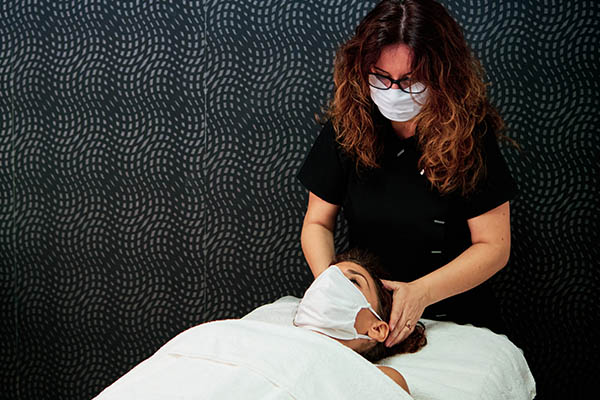
Covid was probably one of the biggest factors leading to the current state of the massage industry. An incredible number of therapists decided to leave the industry out of fear for their own health and the health of loved ones. Many also left because their business is gig work. When they were forced to close for months during the initial outbreak, they had to find other work to survive. After finding their new employment, most never came back.
Whether you are considering a career in massage therapy, are a new therapist, or are a seasoned therapist looking to branch out in a new direction, I would like to offer you some things I have learned during my tenure as a licensed massage therapist. First, love what you do and strive to be the best you can be. Second, don’t rush it. When you are first starting out, you don’t know what you don’t know. Give it time to come to you and wait for your epiphany moment. Third, just because you figured out the first two, you are not necessarily prepared to be a business owner. Far too many therapists branch off on their own too soon. For you, the right time could be right away, but it could also never be the right time. Running your own business requires a level of commitment that makes a work-life balance almost impossible to achieve.
So, if your metric of success demands a healthy work-life balance, you must think long and hard about this equation when making your decision. We have an industry with a 90% attrition rate in the first three years. This is primarily because of the factors I have laid out in this piece. I hope nothing more for you than to avoid being one of those whose career is cut short because of burn-out, lack of success, or worst yet, lack of opportunity because you prioritized your work-life balance in the wrong way.
Works Cited
Shryer, Donna. “Balancing act: how to take the stress out of finding a good work-life balance.” Massage Therapy Journal, vol. 55, no. 3, fall 2016, pp. 43+. Gale OneFile: Health and Medicine, link.gale.com/apps/doc/A462900924/HRCA?u=nysl_ce_syr&sid=bookmark-HRCA&xid=909121f3. Accessed 13 Oct. 2024.
Lyons, Neal. “3 Things You Should Know Before Becoming a Massage Therapist.” Massage Therapy Schools Information, https://www.massagetherapyschoolsinformation.com/becoming-a-massage-therapist/. Accessed 13 Oct. 2024.
That was a good read buddy.. You’re certainly knowledgeable and dedicated to your profession.